Wednesday, May 8, 2013

The Mary Astor Blogathon: Mary Goes to the Dogs

Mary Astor
(1906 - 1987)

The fascinating and entertaining Mary Astor Blogathon continues.  Many thanks to our hosts, Dorian of Tales of the Easily Distracted and Ruth of Silver Screenings.

Mary Astor was born Lucile Vasconcellos Langhanke in Illinois.  The attractive and imaginative only child of driven parents, she became the focus of their thwarted ambitions and the family breadwinner.  The route to success lay in show business and while looks were the key to opportunities on the screen in time Mary discovered a skill to provide independence and a craft in which she ultimately took some pride.  In a career that spanned silent films to live television Mary found few roles that she would acknowledge as worthy.  Mired in "mother roles" at MGM or playing "decorative dolls" did not sit well with the strong-minded Ms. Astor. 

One of my favourite of Mary's performances is of the duplicitous Brigid O'Shaughnessy in John Huston's darkly humorous thriller The Maltese Falcon based on Dashiell Hammett's 1930 novel.  In scene after scene, Mary is perfection as the adventuress.  It is a performance that inspires me to want to rush the sound stage and thump Mary on the back, shout hooray and perhaps even do a little celebration dance.  I think Ms. Astor would be less than impressed with such effusiveness from a stranger, but it's her own fault for being so good.  

Many of us fans who live on the right side of the law enjoy nothing better than a good crime novel or mystery movie.  Alongside The Maltese Falcon, Mary Astor features prominently in the two other literary/film treats we will look at today.

THE KENNEL MURDER CASE (1933)

S.S. Van Dine is the pen name of Williard Huntington Wright, the ne-er-do-well son of a wealthy family whose ambitions and education outstripped his means during most of his life.  Illnesses and a drug habit added to his troubles.  During a prolonged illness he followed the advice of a friend and worked on constructing a mystery novel which proved popular beyond imagination.  The mysteries solved by wealthy amateur sleuth Philo Vance are chronicled in novel form by his attorney S.S. Vane Dine.  The stories are set among the wealthy in New York City and are intricate puzzles to tantalize the reader.  The first of the stories was The Benson Murder Case in 1926.  The actor most associated with the role is William Powell who played Vance in 1929s The Canary Murder Case and The Greene Murder Case.  In 1930 he starred in The Benson Murder Case and in 1933 The Kennel Murder Case.  Basil Rathbone, Edmund Lowe, Warren William, Paul Lukas and James Stephenson are some of the other actors who had a crack at Vance.  As befits a man who once edited a magazine called The Smart Set, Van Dine knew a lot of words and seems to use them all in his stories.  While I might find a Vance story ultimately satisfying, I do find them quite a slog.  However, the film The Kennel Murder Case is a dandy.  Directed by Michael Curtiz with his usual flair for entertainment he keeps the pace brisk with a series of wipes and juggles the suspects with aplomb.

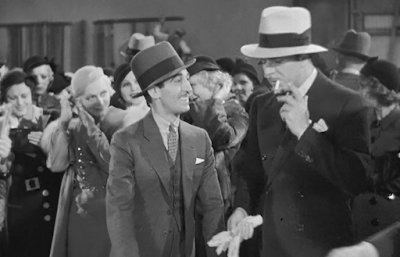
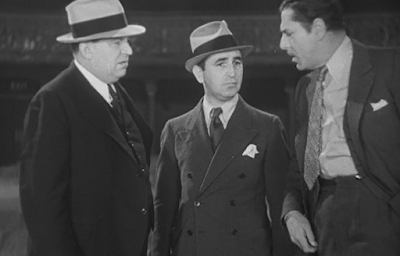
Our characters are introduced at the Long Island Kennel Club competition.  Vance's adorable Scottie, Captain MacTavish is an entrant, but not a semi-finalist.  There is bad blood between two of the finalists Archer Coe (Robert Barrett, Heroes for Sale) and Colonel Thomas MacDonald (Paul Cavanagh, The Scarlet Claw) and when MacDonald's pooch Ghillie is found killed suspicion falls on Coe.  When Coe is killed suspicion falls on just about everybody else in the movie.  He was not a well-liked man.  For starters, there are about two million Chinese distilled into his Cambridge educated cook Liang (James Lee) who is disturbed by Coe's collecting of revered Chinese artifacts.  There is Brisbane Coe (Frank Conroy, The Ox-Bow Incident).  Brotherly love are just words between Brisbane and Archer.  There is Archer's belittled secretary Raymond Wrede (Ralph Morgan, No Greater Glory).  Edward Grassi (Jack LaRue, The Story of Temple Drake) has not only been cheated on a business deal with Coe, he's been seeing Coe's girl on the side Doris Delafield (Helen Vinson, Torrid Zone).  Gamble, the butler (Arthur Hohl, Island of Lost Souls) is not all he seems.  We can't leave out Hilda Lake played by Mary Astor.  Hilda is Archer's niece and she resents not only his tight fist on the purse strings, but his jealous control over her personal life.  

Archer Coe is found dead in his locked bedroom, an apparent suicide.  When Philo Vance hears the news over the radio he suspects murder and cancels a planned ocean voyage to assist District Attorney Markham (Robert McWade, brother of Edward McWade) and Detective Heath (Eugene Pallette, The Adventures of Robin Hood).  The coroner Dr. Doremus (Etienne Girardot, The Whole Town's Talking) is a scene stealer who must be the great-great-grandfather of "Bones" McCoy with lines such as "I'm a doctor, not a magician" and "I'm the city butcher, not a detective."  The spin-off boys dropped the ball with this character.

As the only gals in the proceedings Ms. Astor and Ms. Vinson get to wear Orry-Kelly gowns.  Ms. Vinson, as a shady lady, enjoys off the shoulder negligees and day dresses with a bit of spangle.  Ms. Astor is always perfectly tailored and accessorized.  Both ladies have a fiery nature.  They had legitimate reasons to hate Archer Coe which make them suspects.  They both place themselves in conflict with the investigators when they suspect their lovers may be involved in the killing.  Philo Vance, in his usual methodical manner unravels the locked room puzzle, but Hilda Lake is paramount in bringing the criminal to justice.  The movie is very entertaining thanks in large part to William Powell who makes Philo Vance a more appealing fellow than he appears in print.
 

THE CASE OF THE HOWLING DOG (1934)

Erle Stanley Gardner was a rambunctious youngster who became an energetic and successful lawyer, author of mystery fiction as well as books on travel and conservation.  Along with other legal professionals he started the so-called Court of Last Resort to assist the wrongly convicted.  I highly recommend Dorothy B. Hughes' The Case of the Real Perry Mason for Gardner's fascinating life story.  Gardner's most famous protagonist and greatest gift to popular fiction is Perry Mason.  I love kicking back with one of the Mason page turners.  Perry Mason goes beyond the extra mile for his clients and it echoes much of Gardner's thinking that the "law" has everything on its side in terms of power and resources and anything a lawyer has to do to assist his client is only right.  The first Mason novel was published in 1933, The Case of the Velvet Claws followed by The Case of the Sulky Girl and in 1934 by The Case of the Lucky Legs and The Case of the Howling Dog.  If I had to choose only one favourite Gardner story (please, don't make me!) it would be The Case of the Howling Dog as it packed a real emotional punch upon my first reading.  It was this story that Warner Brothers wanted to kick off a series of films based on the popular character.  The studio's first thought for the role of Mason was Edward G. Robinson.  I would have liked to have seen that.  Warren William, whose first screen triumph was as The Mouthpiece and who had just played Philo Vance in The Dragon Murder Case was tapped to be the screen's first Perry Mason and he's wonderful in a first-class production directed by Alan Crosland (The Jazz Singer).  Canadian born Helen Trenholme plays a most winning Della Street in one of two movies she made for Warner Brothers before returning to a stage career. 

Arthur Cartwright (Gordon Westcott) is a very nervous client.  He wants his neighbor's dog to cease its nighttime howling.  Is a noisy dog the only thing keeping Cartwright up at night?  He seems very  interested in that neighbor, Clinton Foley (Russell Hicks, Charlie Chan in Shanghai) and everyone in that household.  He seems particularly concerned for Mrs. Clinton Foley.  Intrigued by what may be the secret motive behind this client's actions Perry takes on the case which expands to include a Will designed to protect said Mrs. Clinton Foley.  When Arthur Cartwright mysteriously disappears Perry finds that he may have a client in someone he has never met and sets about trying to locate Mrs. Clinton Foley beginning by staking out the Foley home.  On a dark night a beautiful woman enters the home, voices are raised, a dog barks, shots ring out.  The dog and its owner lay dead.

Perry immediately begins working for his client even without her knowledge.  Bessie Foley is played by Mary Astor and, again gowned by Orry-Kelly, she looks marvelous.  Both cool and hot as a woman in desperate trouble she immediately draws you to her side and you want to protect her.  Perry uses all the means at his disposal, especially his favourite of testing the recall of eye witnesses.  This was something Gardner used early in his career, not just for the courtroom effect, but because he truly felt that police skewered the process by planting ideas with witnesses prior to line-ups or photo identification.  
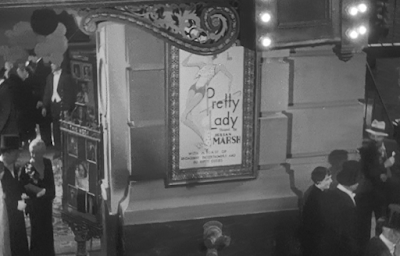
Suspicious characters abound including Foley's secretary Lucy Benton (Dorothy Tree, The Asphalt Jungle) and her chauffeur boyfriend Joe Sawyer (TVs The Adventures of Rin Tin Tin).  Luckily, the police a predisposed to being more helpful than not in the forms of Captain Kelly (Joseph Crehan, Dick Tracy vs. Cueball) and Sgt. Holcomb (Allen Jenkins, Destry Rides Again).

The trial is a testing ground for Perry who becomes a whipping boy for the press when he keeps his client silent.  The court of the popular press is willing to give the beautiful Ms. Astor as Bessie Foley every break and Della is sure that once she tells her side of the story everything will fall into place.  Perry sticks to his tactics and after turning the courtroom into a circus there is a shocking revelation and his client is freed in an ending which probably wouldn't make the screen in only a few months time.  Thank you very much, Mr. Hays.

Run-of-the-mill roles forgotten by their creator immediately the job was done, Mary Astor nonetheless laid the groundwork for one of her most famous characters in these early mysteries from the Golden Age of print detectives.

Friday, May 3, 2013

Bing's Birthday Movie: Rhythm on the River (1940)


It's my favourite holiday of the year.  Bing Crosby's birthday, of which there is some confusion to the actual date.  Is it May 2nd or May 3rd?  I stick with the 3rd thus making it a two day holiday.  Hooray!

This year's Bing's Birthday Movie is the charming Rhythm on the River.  The casual movie fan has probably heard of Going My Way, The Country Girl or High Society, but Rhythm on the River has its fans.  Anyone who has seen it, really enjoys it although it only has a paltry 189 votes on the IMDb.

The story idea is from the deliciously twisted mind of Billy Wilder and the screenplay is by Dwight Taylor who gave us such delightful scripts as Top Hat, The Gay Divorcee and Follow the Fleet, along with thrillers I Wake Up Screaming and Pickup on South Street.

The director of Rhythm on the River is Victor Schertzinger.  A violin prodigy, composer and conductor, Schertzinger began directing films in 1917.  Sound was no obstacle for the director, who continued to compose scores and popular songs.  He has a special place in my heart for the song Sand in My Shoes.  If you haven`t heard Connie Boswell sing that haunting tune - all I can say is it is the reason Edison invented the phonograph.  As a director Schertzinger knew how to successfully combine the musical moments with the comedic and dramatic in such entertainments as the Hollywood spoof Something to Sing About starring James Cagney, Love Me Forever with Grace Moore and the gorgeous 1939 version of Gilbert and Sullivan`s The Mikado.  

Schertzinger and Crosby combined their talents on Rhythm on the River, Road to Singapore, Road to Zanzibar and Birth of the Blues.  It is a shame that we don`t have even more Schertzinger pictures to enjoy, but sadly he passed from a heart attack in 1941 at the age of 53.  His last film, released in 1942, was The Fleet`s In starring Dorothy Lamour.  The movie features Schertzinger and Johnny Mercer standards, I Remember You, Tangerine and the fun novelty piece Arthur Murray Taught Me Dancing in a Hurry.

Basil Rathbone, Bing Crosby

Rhythm on the River is the story of Oliver Courtney played by Basil Rathbone.  The man really should have been in more comedies.  Courtney is a high-strung and famous Broadway composer.  Sadly, he has lost his muse and "temporarily" and on the q.t. collaborating with composer Bob Sommers played by Bing Crosby.  Bob is willing to go along with the arrangement for the money, for the chance to work with the great Courtney and with the hope that it will be his big break.  However, Courtney is also "temporarily" collaborating with lyricist Cherry Lane played by Mary Martin.  Cherry is willing to go along with the arrangement for the money, for the chance to work with the great Courtney and with the hope that it will be her big break.  Only Courtney's transcriber and confidante Billy Starbuck played by Oscar Levant is, in his everlasting sarcastic way, in on the secret.  Once that secret breaks however, Bob and Cherry form a professional and private partnership.  The course of true love does not run smoothly.  Oliver Courtney sees to that.  Music publishers take care of scuttling the couple`s show business dreams.  They already have a full catalogue of Courtney material.  Maybe they should try something original.
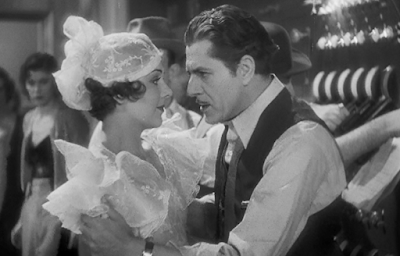
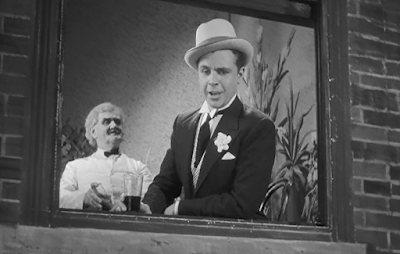
Oscar Levant, Bing Crosby

Musical comedies must have their complications and it helps to have an Oscar nominated soundtrack.  The breakout song from this feature is James V. Monaco and Johnny Burke`s Only Forever.  Along with Bing and Mary`s lovely version you can find recordings by Dean Martin and Nat King Cole.

My favourite of Bing's title tracks is the one for Rhythm on the River.  As with most of his pictures, all you need is Bing and a song, but on this dandy he is backed up by none other than famed Dixieland trumpeter Wingy Manone.  His parents named him Joseph, but after losing his right arm (he used a prosthesis) in a streetcar accident, he could be no one else but "Wingy".

Here's the title tune set in a pawn shop where Bob and Cherry's pal's instruments are being held hostage.  Can't beat Courtney at his own game without a band.  That's Christian "Gepetto" Rub grooving in the background.  Prior to this scene Cherry has a great line of musician snark when she inquires of the lads:  "What else can you fellas play outside of "Tiger Rag" and pinochle?"  Ouch!

 http://www.youtube.com/watch?v=xraBEoQTgDA&list=PL43B44B6203E25867&index=4

Wednesday, May 1, 2013

Caftan Woman's Choice: One for May on TCM

I have often wondered if cinematographer William Daniels ever got tired of looking at Jimmy Stewart.  The acclaimed master of Black & White cinematography fame is often linked with the great Garbo whom he filmed 21 times.  She would insist upon it.  However, Daniels also gave us images of James Stewart in 14 films from his MGM years in films such as 1936s Rose Marie and 1940s The Mortal Storm and The Shop Around the Corner to Jimmy's glorious 1950s career.  The 1950s films include westerns like 1954s The Far Country and 1956s Night Passage, along with the 1954 biography The Glenn Miller Story proving Daniels to be as proficient in Technicolor as in Black & White.  In 1950 when Stewart began seriously to shepherd his post-war career, Daniels was the cinematographer on the whimsical adaption of Mary Chase's Harvey and the western classic Winchester '73.

Winchester '73 is based on a story by Stuart Lake (Frontier Marshal/My Darling Clementine) with the screenplay by Borden Chase (Oscar nomination - Red River).  It is the first, but certainly not the last, western directed by the master of noir Anthony Mann (Raw Deal, Border Incident).  During the 1950s Mann and Stewart would collaborate on eight films, five of them would be westerns.  The IMDb features this quote by William Daniels:  "We try to tell the story with light, and the director tells it with action."  Both gentlemen are at their best with Winchester '73.

 James Stewart

I believe it wasn't until my fourth or fifth viewing of Winchester '73 that I was suddenly struck by the beauty of Daniels camerawork.  Whether it was a silhouette of riders along a ridge, the soldiers by the campfire at night, the harsh majesty of the scenery for the final shootout and the faces.  The faces of the acting ensemble are an integral part of the time, the place and the characterizations.

Millard Mitchell, James Stewart

Our film tells the story of Lin McAdam (Stewart), a Civil War veteran single-minded in his quest for vengeance against an outlaw.  The why's and the who's come about in the telling of the story.  Millard Mitchell (Singin' in the Rain, Thieves' Highway) is Lin's loyal friend High-Spade, who keeps a wide perspective on their narrow focus.  Shelley Winters (The Big Knife, A Patch of Blue), never a glamour puss, but a compelling mix of soft and tough as feisty entertainer Lola.  Traditionally, westerns don't offer an actress much of a chance to display their range, but Winters is so good that the movie could almost have been "The Adventures of Lola Manners".

Dan Duryea, Shelley Winters

Stephen McNally is Dutch Henry Brown, the object of Lin's obsession and man with an equal stubborn streak.  The same year as this film McNally played the compassionate doctor in Joseph Mankiewicz's No Way Out with young Sidney Poitier.  McNally, under his given name of Horace McNally played another caring physician in the Broadway production of Johnny Belinda.  When that play was filmed McNally played the loathsome villain of the piece Locky McCormick.  While Lin and Dutch Henry flirt with madness in their overwhelming need for vengeance, Winchester '73 has a genuine crazy in the character of Waco Johnny Dean played by the always compelling Dan Duryea (The Little Foxes, Scarlet Street).  Johnny is a loose cannon if ever there was one and is a joy to watch.

John McIntire, James Millican, Stephen McNally, Steve Brodie

The Winchester of the title is the prize at an Independence Day shooting match and as the rifle changes hands throughout the film, it changes the fate of many.  Winchester '73 is a journey through which our characters move physically and emotionally.

The outstanding cast includes Will Geer (TVs The Waltons) as a folksy Wyatt Earp.  John McIntire (TVs Wagon Train, The Virginian) as a gunrunner.  James Millican (Carson City, Diplomatic Courier) and Steve Brodie (Crossfire, The Steel Helmet) are Dutch Henry's "gang".  Abner Biberman (His Girl Friday) backs up Waco Johnny Dean.  Ray Teal (TVs Bonanza) is on the right side of the law.  John Alexander (Arsenic and Old Lace) plays a laconic way station owner.  Charles Drake (Harvey, No Name on the Bullet) is an interesting character involved in one of the more shocking scenes in any western. 

Charles Drake, James Stewart, Millard Mitchell, Jay C. Flippen

Jay C. Flippen (The Killing, They Live by Night) is a veteran cavalry sergeant and under his charge are fresh-faced youngsters played by James Best and Tony Curtis.  Their adversary is young Rock Hudson as a fierce and earnest young native chief.  Keep your eyes on those young fellas, they might amount to something in years to come.

Film historians point to Winchester '73 as beginning a cycle of adult westerns in the 1950s and while it truly is a touchstone for a golden era for the genre, it is a film that need not appeal only to fans of that enduring genre.  It is a film for anyone who appreciates strong storytelling, fine acting and the art of William Daniels.

TCM is screening Winchester '73 on Monday, May 20th at 3:45 p.m.  


Tuesday, April 9, 2013

James Cagney Blogathon: Johnny Come Lately (1943)

It's here!  It's here! The James Cagney Blogathon hosted by R.D. Finch, The Movie Projector is here!  A week of love for the one and only Cagney.

Do I seem a wee bit excited?  It can't be helped.  I'm a Cagney fan in a world filled with Cagney fans.  Some of us are of an age where his films were seen first run in theatres.  I fall into the category of people who discovered the actor's brilliance seeing movies as they were meant to be seen - late at night on television with commercials.  Whether he was roughing up a guy or dancing with him the compelling Mr. Cagney stole our hearts and he did it all with his screen presence.  In a business based on publicity, Cagney was an introvert who shunned public displays with the exception of good causes such as the War effort.  He preferred the company of family and a few close friends to the noise and rush of the Hollywood scene.  He enjoyed the comforts his lifestyle afforded by purchasing his beloved farm on Martha's Vineyard fulfilling a childhood dream, but he avoided the trappings of stardom.  His friend  and frequent co-star Pat O'Brien, who loved Jim dearly, nicknamed him "the faraway fella" for his quiet, thoughtful demeanor.  John Larroquette hosted a show on the A&E network in 2001 called The Incurable Collector.  One segment of the entertaining program featured respectful and happy fans from around the world bidding on items from the Cagney estate including a film script, a guitar and some of Cagney's paintings.  Not a Tommy gun in sight from one of the screen's greatest gangsters.  The fans spoke about how these things brought them a sense of closeness to their favourite actor.  While most of us cannot share in that opportunity, we do have his movies and what they meant to him.

Cagney chaffed at the autocratic leadership of the Warner Brothers.  He did his job and did it well, but wanted respect and more control over the direction of his artistic life.  One of the Cagney legends is his tendency to flub a scene at the end of a long day's shoot if it required extras returning for more work the next day.  A subtle rebel who looked out for the little guy.  Cagney first tried life as an independent producer in the early 30s and through Grand National released the adorable Hollywood spoof Something to Sing About and the good tough guy flick Great Guy.  Neither film was successful and he returned to the WB fold for Angels With Dirty Faces, his first Academy Award nomination.

In 1943 after winning the Oscar for Yankee Doodle Dandy, Cagney along with his brother William as producer and physician brothers Harry and Ed as executives formed William Cagney Productions and their first production under that banner was Johnny Come Lately.  In an era of exciting propaganda based action films and brittle comedies, the Cagney brothers returned to a simpler time in a film bathed in a nostalgic glow.  

Johnny Come Lately is an adaption of Louis Bromfield's novel McLeod's Folly.  Bromfield was a journalist (original staff of Time), innovative farmer and noted conservationist.  It was at his Ohio farm that Bogie and Bacall were famously wed.  Bromfield won the Pulitzer Prize in 1926 for Early Autumn.  Others of his works adapted for the screen include The Rains Came and Mrs. Parkington.  Bromfield wrote against the prejudice and hypocrisy he felt was the result of the industrialization of America.  The screenplay is by John Van Druten, the playwright and short story writer had already contributed to the films Gone With the Wind, Pride and Prejudice, and Forever and a Day.  Soon to come would be I Remember Mama, Voice of the Turtle, I Am a Camera, and Bell Book and Candle Johnny Come Lately would be among the last films for director William K. Howard whose career reached back to silent westerns and included The Power and the Glory and Fire Over England.


Set in 1906, McLeod's Folly tells the story of Vinnie McLeod, an elderly widow in a small city who runs her late husband's newspaper.  The wide open town of her youth has become a crowded, graft-ridden despot run by a man called Dougherty.  The town is particularly inhospitable to vagrants to whom Mrs. McLeod offers rest and food in her basement until they can get safely out of town.  She is assisted at home by her housekeeper Aida and at work by her niece Jane and her dusty, old-fashioned staff.  With her limited means Vinnie McLeod takes on the town boss to the extent that she becomes more than nuisance and Dougherty takes to bullying.  Vinnie helps a vagrant, Tom Richards (Cagney), who proves to be an experienced newspaper man.  Circumstances conspire to keep him in the town of Plattsville and admiration for Mrs. McLeod returns him to his recently abandoned life of a crusading reporter.  With the energetic Richards at her side, can right fail to prevail?  It is very sweet.  It is very sentimental.  Some cynical souls may call it corny, but I think Johnny Come Lately has too much heart to be so derided.

Johnny Come Lately received one Oscar nomination for Leigh Harline for Best Music, Scoring of a Dramatic or Comedy Picture.  It is one of five career nominations for Harline, who shared the the 1941 Oscar for Original Score for Pinocchio with Paul J. Smith and Ned Washington and the Best Song Award for When You Wish Upon a Star with Ned Washington.  Vinnie's theme in the score is Balfe's Then You'll Remember Me from The Bohemian Girl.  The use of that tender old ballad tells all you need to know about the tone of the movie.

The movie gave Cagney the chance to spotlight the people he felt were most responsible for Hollywood's Golden Age, the character actor.  There were plenty of quirky roles to go around and lots of talented familiar faces to play them. 


A newcomer was brought to the screen to play Vinnie McLeod.  Grace George (1879-1961) performed in almost 50 Broadway productions between the years 1898 and 1951.  Dramas such as Kind Lady, classic revivals including School for Scandal and leading roles in comedies created a theatre legend.  Her husband was the producer and theatre owner/operator William A. Brady (1863-1950) whose first Broadway play After Dark was in 1889 and who was still going strong in the 40s with Harvey.  His daughter, Grace's stepdaughter, was the Oscar winning star of In Old Chicago, Alice Brady (1892-1939).  

Johnny Come Lately was the only film for Miss Grace George, as she is billed.  She returned to the stage until retiring in 1953.  I imagine it was her preference as her easy, natural performance should have led to more screen roles.  She looks just as if Vinnie McLeod at stepped out of the book:

...She was tall and thin and very straight.  In her youth she had been a beauty, famous in Calamos County and the Southwest, and now in old age, despite all of her worries, her untidiness and her distraction, she remained a handsome woman, although now the beauty remained more in the voice, the eyes and the expression than in the body.  Although the face was wrinkled, the cheeks sagged, and the hair hung in wisps from beneath a worn and dowdy hat there was something about her that arrested a stranger and made him think, "That must have been a fine, handsome woman."


Hattie McDaniel (1892-1952) plays Aida, Mrs. McLeod's "keeper".  It is yet another maid for Hattie, but none of her roles in service ever felt subservient.  She is always the smartest person in the room from Gone With the Wind to TVs BeulahJohnny Come Lately is no exception where her big heart and common sense keep everyone on the right track.


Marjorie Main (1890-1975) plays "Gashouse" Mary who runs a straight joint - as the audience is constantly reminded.  She's sick of paying into Dougherty's protection racket and ready for action.  Main just about steals the picture.  Like Marie Dressler of an earlier decade, Marjorie Main is a character gal who became a popular leading lady in films like Tish, Mrs. O'Malley and Mr. Malone and her signature role of Ma Kettle.  Audiences loved her and producers/directors always found a spot for her despite her eccentricities such as wearing multiple gloves and surgical masks to ward off germs and sometimes stopping in mid scene to set lunch or have a conversation with her husband who had passed away in 1935.  I imagine he said what she wanted to hear.


Edward McNamara (1884-1944) was a Cagney crony whose booming voice was his most recognizable feature.  Once a cop becomes known as a singing cop, he just naturally has to get into the show business.  As Dougherty, McNamara warbles tunes between dastardly deeds.  McNamara had been the only private student ever taken on by Enrico Caruso at the behest of famed contralto Madame Ernestine Schumann-Heink.  Madame's third husband named McNamara in a 1914 divorce suit.  Madame denied all, "Me, in love with that boy?"  His last film was as Officer Brophy in Arsenic and Old Lace (above).  He had a heart attack while delivering some of neighbour Cagney's race horses to the coast.  Of his performance of Dougherty you can say that he really looked the part.


Pretty Marjorie Lord was the ingenue in the piece showing her own share of spunk and the appeal that would make her a television staple on Make Room for Daddy.  Ms. Lord was in attendance at a recent screening of the film as noted in March on Laura's Miscellaneous Musings.


George Cleveland (1885-1957) was a vaudeville veteran who played in close to 200 movies including serials, westerns, and splashy musicals.  The Cape Breton born Cleveland found himself a welcome spot on television in 1954 as Gramps Miller on the beloved Lassie.  In Johnny Come Lately he plays the sweetly soused reporter Willie Ferguson.


Robert Barrat (1889-1970) plays a political boss with a penchant for ketchup.  Wait until you see what he does!  Barrat is a chameleon of an actor who never disappoints in roles such as the anarchist turned capitalist in Heroes for Sale, Chingachgook in The Last of the Mohicans and Wolverstone in Captain Blood.  Keep your eyes peeled for Barrat.  You never know when he'll show up.


Margaret Hamilton (1902-1985) was a former teacher and single mother who worked in films from the 30s to television starting in the 50s and toured with A Little Night Music in the 70s.  She is an actress beloved by generations for frightening us The Wizard of Oz and a welcome sight in movies as diverse as These Three and Broadway Bill.  Cagney admired her work tremendously and was thrilled to have her in Johnny Come Lately as reporter Willie's "dragon lady" sister.

Finally in charge of his own image and legacy, Cagney chose to give us the very definition of a feel-good picture.  Perhaps that tells us all we need to know about "the faraway fella".


Tuesday, April 2, 2013

Caftan Woman's Choice: One for April on TCM


The word "genius" is flung around a lot in the entertainment industry.  I use it most often when speaking of the people who make me laugh.  Surely there is no more apt description of writer/director Preston Sturges who had an unparalleled string of genuine comedy classics in the 1940s.  Who else, in the middle of wartime, could poke fun at motherhood, patriotism and heroism in The Miracle of Morgan's Creek and Hail the Conquering Hero and make us like it.  Sturges took on his own profession in Sullivan's Travels and no one felt the one-two punch because they were laughing so hard.  In The Palm Beach Story and, most especially, in The Lady Eve Preston Sturges took the romantic comedy, turned it inside out, stood it on its head and kicked it in the pants.  Genius.

Unfaithfully Yours is a Sturges film that I both adore and ignore.  Years go between viewings because I am afraid it won't be as funny as I recall.  However, each viewing proves my fears are groundless.  After all, we're dealing with a genius.

"A thousand poets dreamed a thousand years, then you were born, my love."

Sir Alfred De Carter (Rex Harrison) is a baronet, a wealthy and internationally famous symphony conductor who is devoted to his young and beautiful wife.  Lady Daphne De Carter is the American girl he swept off her feet.  She is devoted to her husband.  They are the picture of overindulgent romance.  Depending on your constitution, you will find their devotion either inspiring or revolting.

"Well, August, what happy updraft wafts you hither?"

Lady Daphne has a sister Barbara (Barbara Lawrence) who also married well, at least she married well-to-do.  Barbara's husband is the stuffy and unimaginative August Henshler (Rudy Vallee).  August is a practical and literal man.  When Sir Alfred travels he asks August to keep an eye on Daphne as in not letting her fret in his absence August takes it to the level of placing a private eye on the case.

"You handle Handel like nobody handles Handel. And your Delius - delirious!"

Private eye Sweeney (Edgar Kennedy) is a great fan of Sir Alfred's.  He is also a man of a philosophical bent when it comes to beautiful young wives and handsome secretaries (Kurt Kreuger) of men of the world.  Sir Alfred is not a man of such pragmatism.  Sir Alfred is a man of emotion.  To whatever height his devotion to Daphne reaches, it is to that height his jealousy rages at the suspicion aroused by the detective's report.

"I doubt that you played Russian Roulette all the time with your father!"

Visiting conductor Sir Alfred brings the orchestra to its zenith and the audience to its feet with his conducting of Rossini and Wagner and Tchaikovsky.  All the while he moves the audience to the depths of their soul, Sir Alfred is imagining the perfect murder plot.  With split second timing and an ease of manner wondrous to behold he dispatches his disloyal wife and frames the duplicitous secretary.   Sir Alfred's vision of himself includes that of a generous and forgiving husband and of a despondent suicide.  Alas, real life even for a baronet and wealthy and internationally famous symphony conductor is rarely as uncomplicated as our imaginings.  Rex Harrison is not only hysterically funny with the glib lines offered Sir Alfred, he proves himself a master mime as well as he attempts to put his murderous plot into action.

Unfaithfully Yours was based on a story and film treatment that Preston Sturges wrote in 1933 entitled The Symphony Story.  A studio critique at that time was impressed with the originality of the story but felt it wasn't the sort of picture audiences would go for.  Lamentably, this proved to be the case in 1948 when this delightful bonbon of a movie flopped.  Sturges' streak had come to an end. 

TCM is screening Unfaithfully Yours on Saturday, April 13th at 10:15 pm as part of The Essentials:  Linda Darnell.

Sunday, March 31, 2013

Such News!

Self portrait - Janet Hall

Not everyday news.  Garry and I are incredibly proud of our daughter Janet who is pursuing her dream of becoming an animator.  She has been accepted into the Bachelor of Animation program at Sheridan College.  Janet has popped up a few times in these pages in the five years since I started this blog.  There's Janet and her brother Gavin.  Janet winning a writing award in high school.  Janet and her prom dress.  Janet meeting the Daleks.  I know I bring her up quite often when commenting on blogs if she has a perspective to the subject at hand.  So, for those of you who may have wondered, she does exist.  Click here for an illustration she did for this blog.

Last year Janet took an Art Fundamentals course at Sheridan to test her talent and commitment, and to get that all important post-secondary art credit.  All of her family and friends were certain that she would be able to attain this next goal.  However, the time period between the portfolio submission and the admissions offer will always be known to me as the Pepto Bismol era.

Janet has been surrounded by artistic people.  Her Aunt Paula's sketches have been the pride of the family for years.  Her Aunt Maureen is a former professional photographer who brings that standard to her annual photos from the Toronto International Film Festival which are garnering online fans.  Her Aunt Tracey is an award-nominated photographer who runs Tracey Nolan Studios along with other enterprises.  Tracey also worked in production in animation with the likes of Derk Lamb and Kaj Pindal.  I can boast no such beneficit influence.  However, a close examination of my "parenting plan" reveals a concerted effort and no little expense toward the happy goal of spending as much time as possible just sitting around the house watching cartoons with my kids.  Aha, bragging rights!


Friday, March 29, 2013

Fashion in Film Blogathon: Born to Kill (1947)


Robert Wise's 1947 crime picture Born to Kill is noir right down to its very soul.  Based on James Gunn's novel Deadlier Than the Male, photographed in unflinching starkness by Robert De Grasse with gowns by Edward Stevenson.  Wait.  "Gowns by Edward Stevenson", the guy that made Lucille Ball such a fashion-forward and timelessly snazzy dresser in all of her TV shows?  That guy?  Yes indeed, the Texas born Stevenson had been making Hollywood's leading ladies look their best since the 1920s and helped RKO gain respectability in the looks department.  His one Oscar win was shared with Edith Head for 1960s The Facts of Life starring, you guessed it, Lucille Ball.

Born to Kill is a lurid tale of murder, lust, secrets and twisted loyalties.  As the viewer is taken on the journey of violence and, shall we say, poor choices the viewer is also shown what their closet would look like if they had money or their best friend was Edward Stevenson.  Claire Trevor as Helen Brent is obsessed with murderer Sam Wild played by Lawrence Tierney.  Her other obsession is money.  She doesn't have any of her own, but she's around it and, boy, she dresses it.

 Claire Trevor as Helen Brent

Here's Helen at the courthouse in Reno where she has just divorced some poor schmuck.  He probably didn't have enough money.  He probably was sane.  All is perfection.  Note the hat and gloves, and there's a surprise.

The rivets appear to be part of the suit jacket, but they actually belong to the strap of the bag which blends seamlessly with the ensemble.  Imagine having a purse that you can only wear with one outfit!

Isabel Jewell as Laury Palmer

Laury is a gal who likes a good time and likes men.  Her clothes give no doubt as to her intentions.  Currently she likes a guy named Sam.  Laury likes 'em tough.  It won't last.

Helen meets Sam.  Sam meets Helen.  I guess he was able to see something beyond this chapeau.  The fact that Claire Trevor can actually carry this thing off says a lot about character.  I have one question for ladies of the 1940s - why?

Now, this is quite the fetching travel outfit.  The hat matches the scarf.  The bag is ueber stylish and the fur coat is flung carelessly around the shoulders - looking like it doesn't care.

Audrey Long as Georgia Staples

This is Helen's half sister Georgia.  Georgia is the moneyed one in the family.  She always looks nicely put together and at ease.  She's a good kid.  Helen should look out for her.


Now, that's a hat a gal can be jealous of.  Helen spangles up and sparkles as much as she can edging close to over-the-top, but somehow staying true to her character.


Georgia on her wedding day.  I haven't quite made up my mind about the loops, but she looks demure without being prissy.  She's a lovely bride.  Too bad the bridegroom is a murderer with the hots for her half-sister.  

Too bad Georgia's Matron of Honour can't get her mind off the bridegroom.  Her bridal like veil silently speaks her intentions as she stands in front of the minister and can't take her eyes off the groom.  Too bad Helen can't see that the rest of the world, including her nice guy fiance Fred Grover played by Philip Terry, aren't as blind and dumb as she thinks they are.


This silky number is what Helen wears around the mansion late at night to make warm milk or her new brother-in-law.


As Helen becomes further embroiled with the unpredictable Sam, her look begins to soften.  She's getting what she wants, but she's losing herself.

Esther Howard as Mrs. Kraft

This is Laury Palmer's friend Mrs. Kraft.  She's on a dangerous quest, but she's dressed for it.  A hat that size just has to come with a hat pin.


This robe seems more like something Georgia would wear.  Helen seems to be trying to hang on to some sense of normalcy.


Not a spangle to be seen in Helen's desperate final act to save Sam for herself.


Stripped of the hat and coat, the "Mother Superior" vibe of this dress is cheekily at odds with woman who realizes she's lost her soul.

Helen may be one messed up, misguided gal but, thanks to Edward Stevenson, she looks good every step of her downward spiral.


I'm thrilled to be participating in Angela of The Hollywood Revue's Fashion in Film Blogathon featuring many eye-opening and fascinating posts.